
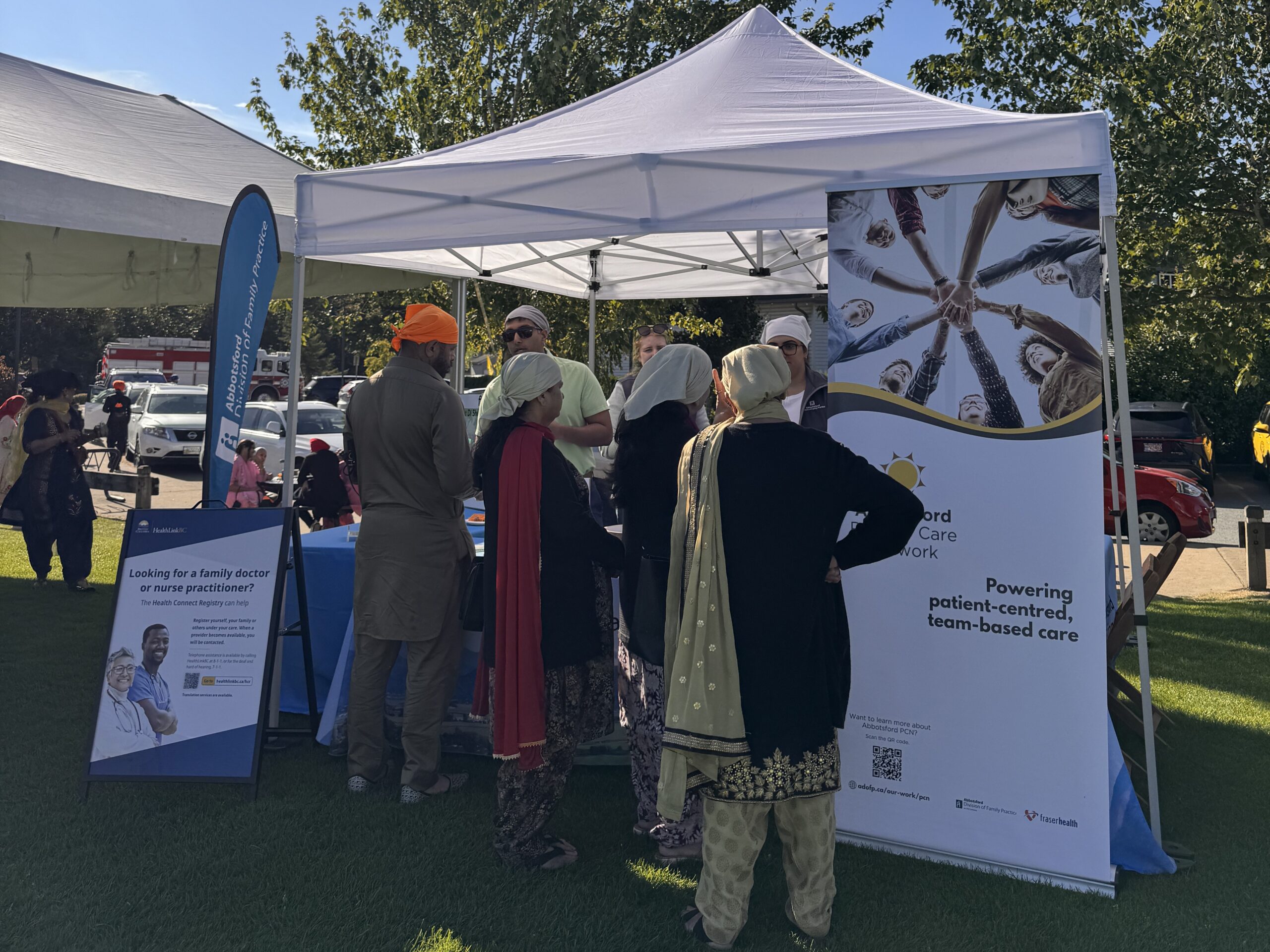
Abbotsford Division's Primary Care Network team at the Nagar Kirtan event in Abbotsford last September. The South Asian community comprises more than 32 percent of the city's population, according to data from the City of Abbotsford.
By Mari-Len De Guzman
Team-based approach is designed to promote patient-centred care by providing access to multidisciplinary health professionals supporting primary care providers. And for physicians managing large, complex patient panels, cultural alignment is a key component in this dynamic.
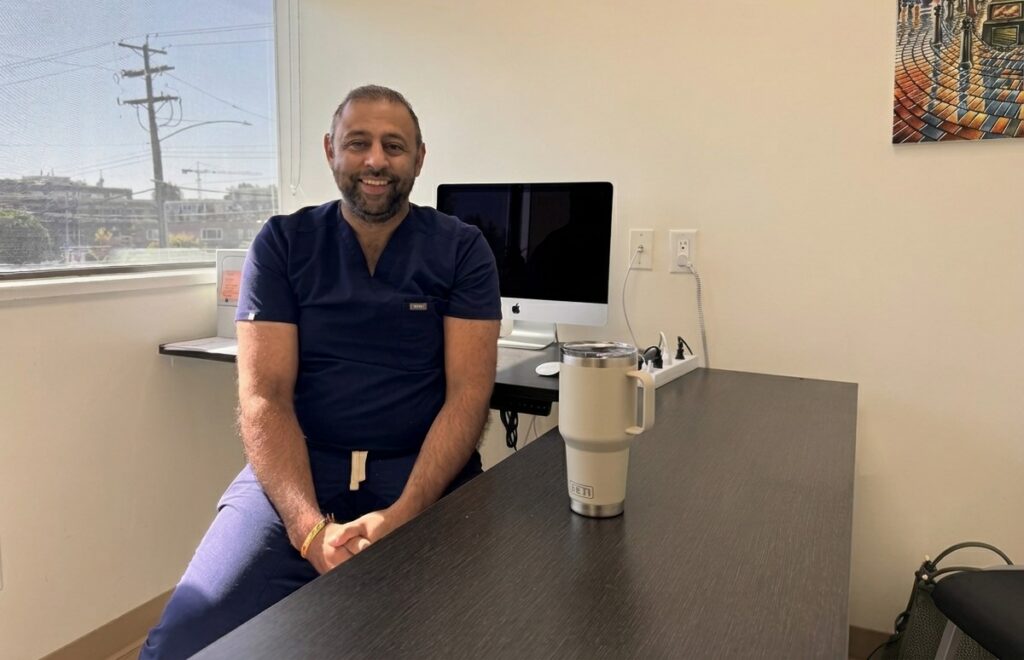
Family physician Dr. Ashish Grover recognizes the benefits of working with allied health providers (AHPs) through the Primary Care Network. He has also highlighted a key opportunity for growth: addressing language and cultural barriers that arise in primary care.
Grover is a huge advocate for the South Asian community, and his family practice at Lincoln Court Medical Centre reflects this advocacy.
“They’re at a higher health risk and there’s not enough resources for them in Abbotsford,” Grover says. “You have to really understand that culture, the large family visits, the multiple follow-ups, the education aspect.”
As one of the early clinics to join the Abbotsford Primary Care Network (PCN) following a successful pilot program, Grover knows the value AHPs bring to the health-care table. And he views PCN as the vehicle to bring culturally safe, multidisciplinary care for the South Asian community in Abbotsford.
Abbotsford PCN recently added a social worker to its AHP roster, with a special focus on the South Asian patient population. A graduate of the University of Manitoba, Pavitar Singh provides culturally responsive social work services to a diverse client population, with a primary focus on serving South Asian individuals and families.
In his new role, Singh says he aims to help improve clients’ “independence and quality of life through compassionate and patient-centred care.”
As a PCN social worker, Singh will work as part of a collaborative, interdisciplinary team, which includes physicians and nurse practitioners, to develop care plans and services for patients.
Focus on chronic conditions
In his primary care practice, Grover sees a higher rate of chronic conditions among his patients, who are largely of South Asian ethnicity.
He says having PCN’s chronic conditions hub located in close proximity to his clinical team at Lincoln Court Medical is a huge help for his patients with chronic diseases, providing convenient access to a chronic conditions nurse, registered dietitian and clinical pharmacist. The chronic conditions clinic is one of three PCN hubs located across Abbotsford.
“Consultations from the nurse side, for example, is really helpful because then the patients really get that comprehensive information,” Grover says. “It’s about, ‘How do I prevent the illness from happening?’ Primary prevention is better than cure.”
The AHPs are also key to reinforcing patient education when it comes to chronic conditions.
“The duration of family medicine visits compared to visits with AHPs are hugely different, and that’s a benefit. The AHPs are following up on weights, neuropathy checks, medications changes, and they’re very self-motivated,” Grover notes.
Grover and his team have also been proactive about exploring how their patients may benefit from many of the AHP services available through Abbotsford PCN, including advance care planning, chronic conditions management, diet and nutrition.
“I’ve been used to this PCN team-based model where it’s not just doctors but a multidisciplinary team. Especially for doctors with large panels, the more you can start targeting patients and getting them access to different types of care, it’s only going to benefit them more,” Grover says.
Abbotsford PCN currently provides clinical counselling, registered dietician, clinical pharmacists, chronic conditions nursing, Indigenous cultural advisor and social work services, including for Indigenous communities and South Asian populations.
Related resources
For questions on how to get your primary care clinic set up with PCN, email pcn@adofp.ca.
Patients who would like a referral to a PCN provider should contact their family doctor.
Are you looking for a family doctor or nurse practitioner? Register with the Health Connect Registry to get connected with an available primary care provider within your community.